Recurring Donor Direct Mail: The 5-Touch Renewal Series
June 17, 2026

Recurring Donor Direct Mail: The 5-Touch Renewal Series
Run the math on your recurring donors. Say you have 200 monthly donors giving $50 each. That's $120,000 in predictable annual revenue. Now lose 29% of them this year (a normal attrition rate for nonprofit monthly programs), and roughly $35,000 walks out the door. Not from a failed campaign. From a renewal you never sent.
Most organizations don't lose donors because supporters stopped caring. They lose them because the renewal moment came and went with one or two automated emails that nobody opened. Overall donor retention now sits around 31.9% across the sector, according to the Fundraising Effectiveness Project. The nonprofits beating that average aren't sending more email. They're running a structured, multi-touch renewal sequence that mixes digital and physical outreach.
This article gives you that sequence: five touches, exact timing, channel, and message for each. Hand it to a staffer or an intern and say "build this." That's the goal.
Why Email-Only Renewal Programs Fail
Your recurring donors get the same inbox you use for everything else: the weekly newsletter, the impact update, the year-end appeal, the event invite. By the time a renewal reminder lands, it's competing with all of that, and losing. Headline open rates on nonprofit email sit near 29% according to Neon One's Nonprofit Email Report, but that number is inflated by Apple's Mail Privacy Protection, so actual human opens are far lower. A renewal note buried in that stream gets archived in a swipe.
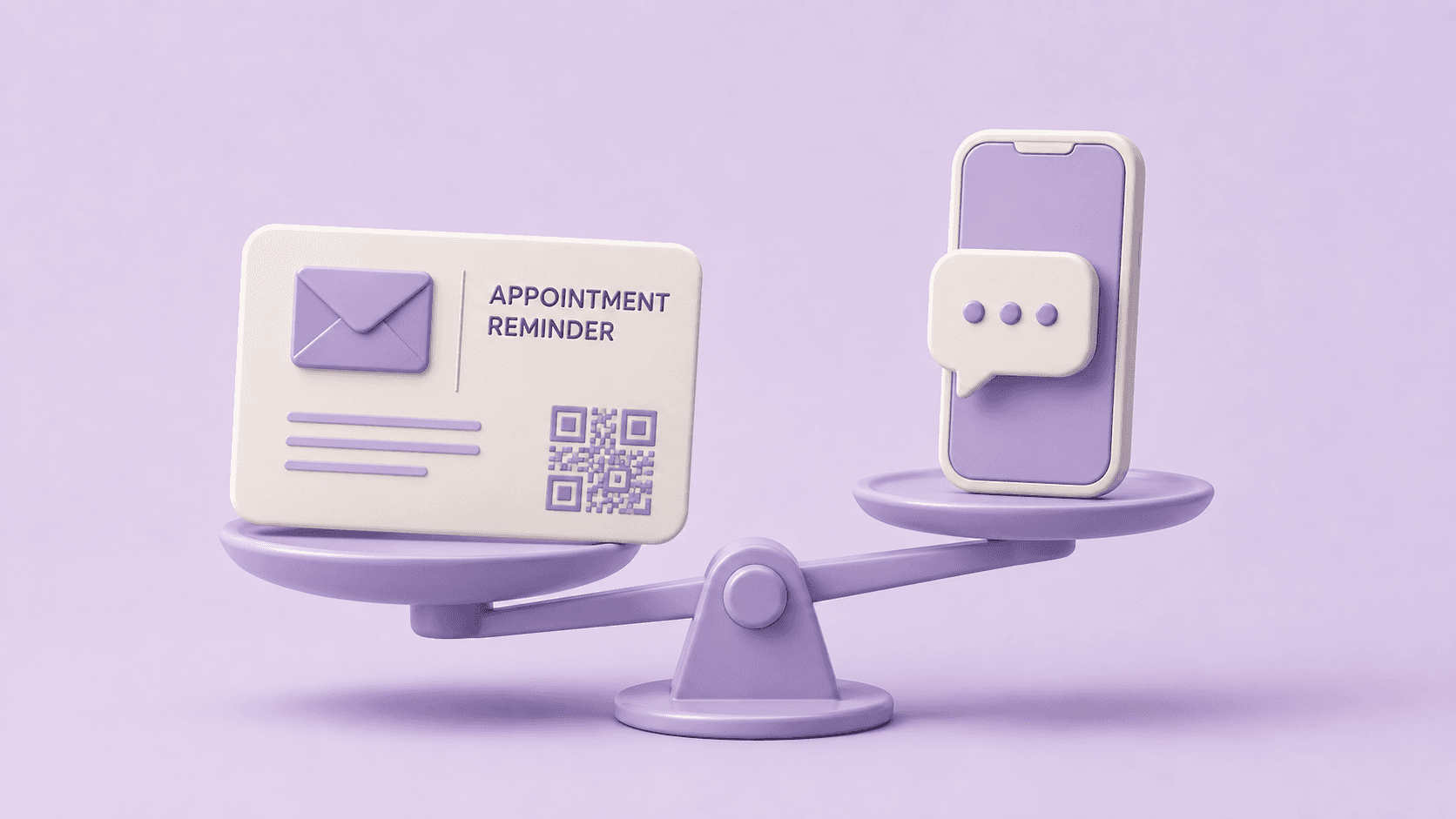
Physical mail breaks the pattern because it arrives in a channel that isn't crowded. A postcard doesn't compete with your newsletter. It sits on the kitchen counter. A Canada Post neuromarketing study found that direct mail requires 21% less cognitive effort to process than digital ads and produces 70% higher brand recall, which means it actually gets read. That's over two weeks of passive reminders for the cost of a single stamp. The renewal email gets one shot at an inbox. The renewal postcard gets a month on the fridge.
This matters most at the 60-day mark before a donor's renewal date, early enough to prompt action, late enough to feel timely. The physical touch isn't there to add volume. It's there to add a privacy-resilient channel that reaches donors without relying on cookies, inbox algorithms, or open-rate guesswork.
The 5-Touch Annual Renewal Series
Here's the full cadence. Timing is anchored to each donor's individual renewal date, not a single calendar blast. Variable data and automation make that possible at any list size.
Touch 1 — 365 Days Before Renewal: Anniversary Thank-You (Email)
Channel: Email
Timing: The donor's giving anniversary
The ask: None. This touch builds goodwill, not pressure.
Message: "You've been giving for [X] years. Here's what your support made possible." Lead with one concrete outcome. Include a QR link or button to an impact report or a 60-second video.
Why it works: Donors who feel seen renew. Open the year with gratitude, not a transaction.
Touch 2 — 60 Days Before Renewal: The Postcard (Physical Mail)
Channel: A personalized postcard, triggered automatically
Timing: 60 days before the renewal date
The ask: Soft and specific, tied to the donor's history
Message: "Your annual renewal is coming up. Here's what $[amount]/month does in a year." Print the donor's name and their actual giving amount using variable data. Add a QR code that opens instant re-authorization or an email opt-in confirmation.
Why it works: This is the highest-leverage touch in the sequence. It's the only one that doesn't fight your inbox for attention, and it lands at the exact moment a donor is most reachable.
Touch 3 — 30 Days Before Renewal: The Direct Ask (Email)
Channel: Email
Timing: 30 days out
The ask: Clear and direct
Message: "Your $[amount] recurring gift renews in 30 days. Confirm your support for [next year]." Add an upgrade option in one line: "Consider moving to $[amount + 10] this year." Make the upgrade a single click.
Why it works: By now the donor has seen the postcard. The email reinforces a decision already forming.
Touch 4 — 7 Days Before Renewal: The Final Reminder (Email + SMS)
Channel: Email, with optional SMS
Timing: One week out
The ask: One action, no friction
Message: "Your gift renews in one week. Reply CONFIRM or tap here." Keep it under 40 words. Urgency without guilt. You're reminding, not pleading.
Why it works: Short messages at the deadline catch the donors who meant to act and forgot.
Touch 5 — 1 Day After Lapse: The Save (Email)
Channel: Email
Timing: The day after a missed renewal
The ask: Restart, fast
Message: "Your recurring gift has lapsed. Here's how to restart in 30 seconds." Link straight to a pre-filled reactivation page.
Why it works: A same-day nudge recovers donors before the lapse hardens into a habit. Keep it to this single touch. A full win-back program is a separate effort. (See our guide to reactivating lapsed donors for that sequence.)
Automating the Physical Mail Touch
The postcard is the touch most teams skip, because traditional print means proofs, vendors, and trips to the post office. Automation removes all of it. Here's the setup with BirdseyePost, most of which Penny, our AI agent, handles for you:
Connect your data. Link your donor CRM or a simple spreadsheet of names, renewal dates, and giving history.
Set the trigger. Tell the system to mail each donor 60 days before their individual renewal date. From then on, the right card goes out on the right day, automatically.
Personalize at scale. Variable data printing prints each card with the donor's name, giving history, and ask amount. No manual merge files.
Hand off production. Penny coordinates printing, USPS prep, and mailing end to end. No staff time, no post office runs.
Keep deadline flexibility. If a board approval slips, a rush print option keeps the schedule intact.
The cost surprises most people. Qualified nonprofits mail at deeply discounted USPS rates. Automation letters start near $0.162 per piece under the July 2025 schedule. Add print, and a single card runs roughly $0.30 to $0.40 all-in. For 200 recurring donors mailed once a year, the postage line is under $35, and the full physical program lands in the low hundreds. Set against $30,000 in at-risk revenue, that's a rounding error.
This is the same logic behind any automated direct mail flow: configure it once, and it runs for every donor without anyone touching it again.
What to Put on the Day-60 Postcard
Physical mail rewards restraint. You have a few seconds and a few inches. Use them well.
Front:
One strong impact image: a beneficiary photo or a clear program outcome
The donor's name, printed via variable data
A single-line impact statement: "Your $50/month fed 24 families last year"
Back:
The renewal CTA and the personalized ask amount
A SnapCapture QR code that opens re-authorization and tracks the scan to that individual donor
Your logo and return address
Three sentences, maximum
Format: A 4x6 or 6x9 card, large enough to read at a glance, no envelope to open. The postcard is not the place for long-form persuasion. It's a tap on the shoulder that points to one action.
Measuring Renewal Rate Improvement
You can't prove the sequence works without a baseline. Capture these four numbers and the case makes itself.
Set your baseline. What's your current renewal rate, email-only? That's year zero.
Attribute by channel. Track QR scans from the day-60 postcard separately from email renewals using UTM parameters and unique codes. Individual-level attribution ties each scan to the donor who got that card.
Watch the 30-day window. Count renewals within 30 days of the postcard send as influenced by that touch.
Compare year over year. Measure renewal rate in year one (full sequence) against year zero (email-only).
The upside is real. Recurring donors already retain at roughly 85% annually versus about 43% for one-time givers, per Blackbaud Institute data, and they carry far higher lifetime value. Blackbaud puts recurring donors at 600–800% more value over their lifetimes, staying active two to three times longer. A structured renewal sequence protects exactly that group. Closing even a handful of would-be lapses moves your renewal rate by points you can measure.
Build the Sequence Once, Run It Every Year
The strength of this system is that it compounds. You design the five touches one time. You connect your donor data one time. After that, the sequence runs for every donor, on their own renewal date, every year: anniversary email, day-60 postcard, the email cadence, and the day-after save, all firing on schedule without a staffer remembering to send them.
The donors are already yours. The renewal moment is already coming. The only question is whether you'll meet it with a structured sequence or a single forgotten email. Strong donor relationships are built on consistency, and physical mail is one of the most durable ways to show up.
Want the postcard touch handled for you? Connect your donor CRM to BirdseyePost and Penny will automate the day-60 renewal mailing: printed, personalized, and tracked, donor by donor. Your team sets the rules once; we handle every print run, postal prep, and delivery from there.
Frequently Asked Questions
When should the physical postcard go out in the renewal sequence?
Mail it 60 days before each donor's individual renewal date. That's early enough to prompt action and late enough to feel timely. Because the timing is tied to each donor's date rather than one calendar blast, automated direct mail flows handle the staggered sends for you.
Can I run this sequence with just a spreadsheet instead of a CRM?
Yes. You need names, renewal dates, and giving history. BirdseyePost connects to a donor CRM or a simple spreadsheet, then triggers each card 60 days out and personalizes it with variable data printing.
How do I measure whether the postcard actually drove renewals?
Give the postcard its own SnapCapture QR code and UTM parameters so scans track separately from email renewals. Count renewals within 30 days of the postcard send as influenced by that touch, then compare your year-one renewal rate against your email-only baseline.
What happens if a donor lapses anyway?
Touch 5 sends a same-day "restart in 30 seconds" email the day after a missed renewal. Keep that to a single message. A full win-back program is a separate effort with its own cadence.